
Document of the Month 6/26: Timurid Epistolary Collections

Document of the Month 6/26: Timurid Epistolary Collections as a Source for Social History

by Danielle Zwarthoed
 

This article explores some ways in which epistolary collections can serve as a source for the social history of the premodern Islamicate East, especially the Timurid period (9th/15th c.). Inshāʾ and other epistolary collections are of interest because very few Timurid documents are accessible to historians, if they survived at all. Insofar as epistolary conventions and inshāʾ style tended to endure over time, there are opportunities for comparing Timurid inshāʾ collections with their predecessors, and with documents of the Invisible East corpus.

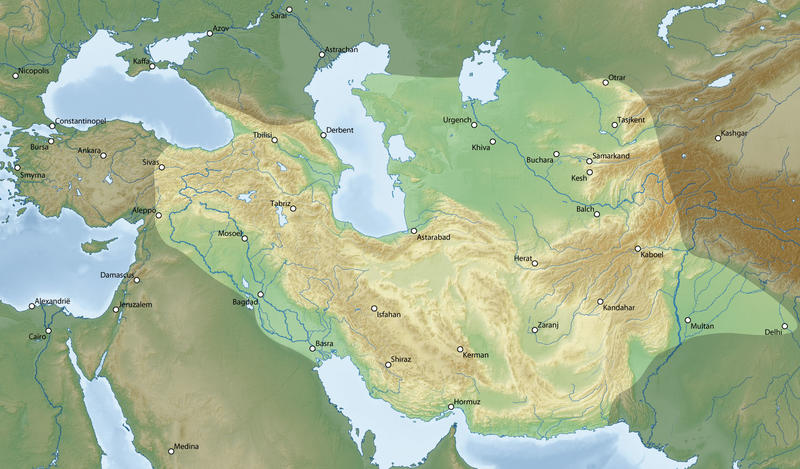
The Timurids (1370-1507) were the last famous dynasty to come from the Central Asian steppe to subjugate Khurasan and Transoxiana (Figure 1). This dynasty is better known for the fierce military campaigns of its eponymous founder, Timur (or Tamerlane), and for the so-called Timurid “Renaissance”, that is, the splendid artistic, architectural and literary achievements created under its princely patronage. Little is known, however, of the history of Timurid subjects “from below” (Thompson 1963, 8–11), partly because the bulk of Timurid archives and documents has not survived to the present day. Although there is evidence that the Timurid bureaucracy produced numerous decrees and petitions and kept a copy of them in registers called daftar, these records have since vanished. Various hypotheses have been put forward to explain this scarcity of archives from pre-modern Muslim administrations (Paul 2018). Timurid chanceries were nomadic and followed the sultan in his campaigns, which increased the likelihood of losses. During political instability and succession crises, archives were probably looted and the precious paper sold on to be reused or burnt as fuel in an arid region where wood was (and still is) scarce.
timurid empire

Fig. 1: Map of the Timurid empire at its greatest extent, c.1405. Wikimedia, public domain. CC BY-SA 3.0

Timurid inshāʾ collections

Social historians can however draw on the sources that most closely resemble the missing archives, namely, epistolary collections (Paul 1995). Timurid epistolary collections may be divided into three categories. The first two categories belong to the inshāʾ literary genre, the art of composition (Paul 1998).
Firstly, we have collections of documents produced by the Persian-speaking dīwān (chancery ) of the Timurid administration, which dealt in particular with finance and taxation, as opposed to the Turkic dīwān responsible for military administration. These documents were copied to serve as templates for apprentice secretaries. We also have inshāʾ collections of private letters. These were copied because of their literary merit or the fame of their author. Manuscripts containing inshāʾ collections display distinctive features. 

Standard format

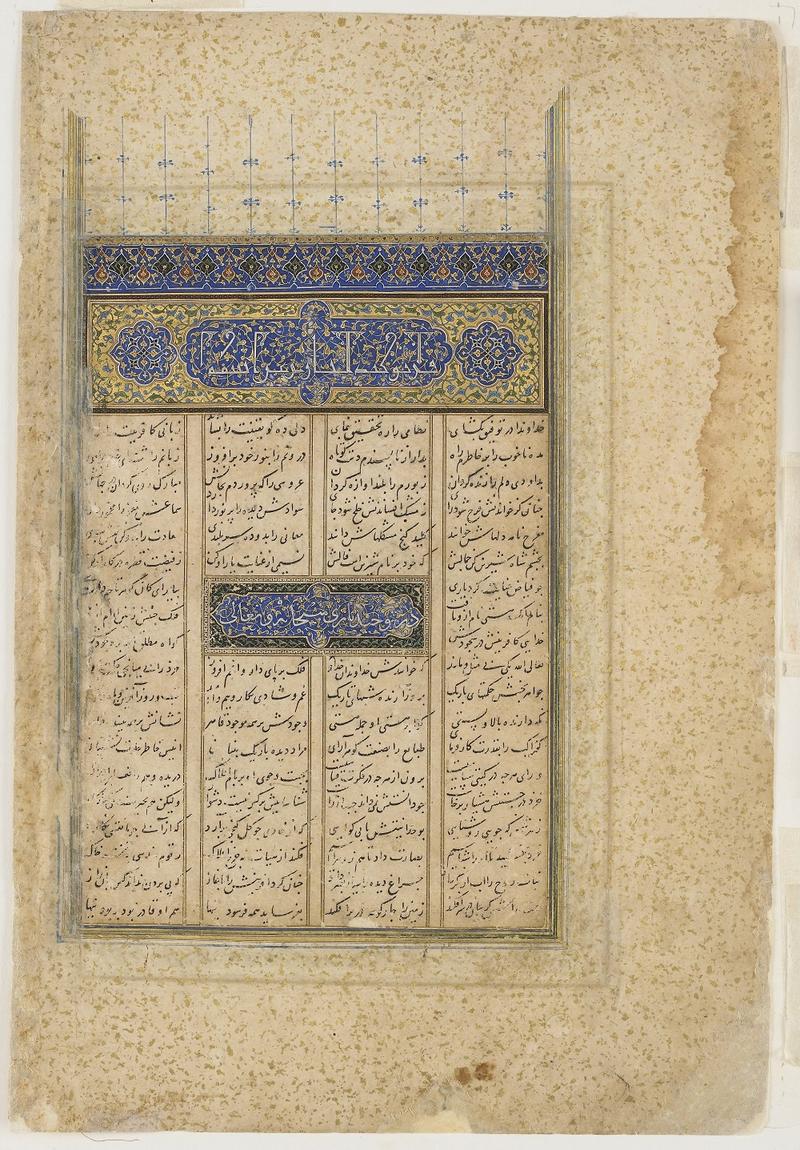
In these carefully crafted manuscripts intended for educational purposes, red ink is often used – as it is in many other manuscript genres – for the text of rubrics (headings) or quotations, such as quotations of Qur’anic verses or Persian poetry. This helped readers to easily distinguish one letter from another. The script is fairly legible, with dotted letters. The Timurid period is when the nastaʿlīq script, which emerged in the second half of the 8th/14th century in Tabriz and Shiraz, is said to have been systematised by Herati calligraphers such as Mīr ʿAlī Tabrīzī (active ca. 800/1400) (Hanaway and Spooner 2007; Fażā’ilī 2012). Written with a swift hand and requiring little space, this script is regular, relatively easy to read, and aesthetically pleasing (Figures 2 and 3). From the late 15th century onwards, nastaʿlīq became the Persian script par excellence from Ottoman Turkey to Mughal India. Thus, it is important to understand that the layout and style of writing differ between the original letter and its reproduction in an inshāʾ collection. Meanwhile, the insignia — monogram, signature, seals — that authenticate a chancery letter and lend it authority, disappear entirely from the inshāʾ copy. Moreover, copyists often decided to omit parts of the letters they deemed uninteresting. As they attached more importance to rhetoric, they sometimes eliminated sections of letters containing factual information, which, unfortunately, would have been of great interest to social historians. Some letters reproduced in inshāʾ collections are significantly altered, and some might even be forgeries. Historians have to account for these limitations when using inshāʾ collections as a source.
 

folio from a khusraw u shirin by nizami d 1209 verso  text and illuminated heading sarlawh f1931 37 1 medium

Fig. 2: Folio from a copy of Niẓāmī's Khosrow and Shirin with calligraphy in nastaʿlīq. Tabriz, c. 1400. Freer Gallery of Art, F1931.37 (image in public domain).
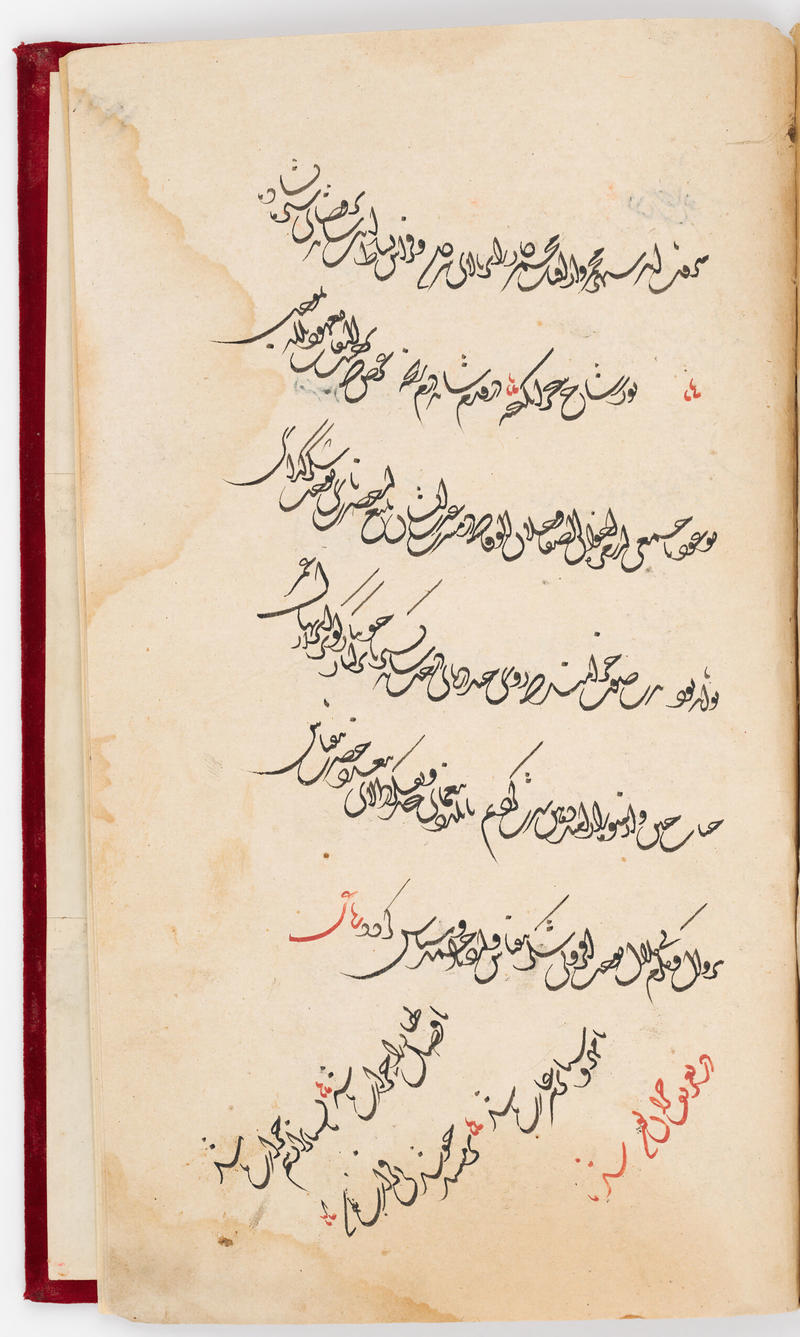
figure 3 dotm june

Fig. 3: Folio from a manuscript of the Munshaʾāt by Sharaf Munshiʾ. Iran, 1486. Harvard Art Museums collections online, 31.2015.32.


Al’bom Navoi 

Historians of the late Timurid period are fortunate because they can also make use of a third category of epistolary sources, which amounts to one collection of original letters that does not strictly fall within the inshāʾ genre proper. This is the Majmūʿa-yi murāsalāt (“Collection of Letters”), known by Russian-speaking historians as the Al’bom Navoi. This late 15th-century manuscript, preserved in Tashkent (Uzbekistan), contains autograph letters written by famous members of the Naqshbandiyya, a powerful Sufi brotherhood closely connected to Timurid sultans. Authors include the Sufi poet ʿAbd al-Raḥmān Jāmī (d. 898/1492) and the Sufi shaykh Khwāja ʿUbayd Allāh Aḥrār (d. 895/1490), an important landowner in Transoxiana who became involved in the political life of Samarqand. These letters are requests, petitions and supplications, addressed predominantly to the Timurid court in Herat, and in particular to the foster brother and very close adviser of Sulṭān Ḥusayn Bayqara (r. 874-911/1469-1506), the famous poet who wrote in Chaghatay ʿAlī Shīr Nawāʾī (d. 906/1501). These letters have been edited with facsimiles and partly translated into English and Russian (Aḥrār 2002; Jāmī 2019).

By contrast, in inshāʾ manuscripts, the material aspect of Al’bom Navoi suggests that it was not produced for didactic purposes. One might wonder whether it was really intended to be read at all, because of its unusual layout. This manuscript contains 46 folios on which 594 letters are compiled, that is, an average of 13 letters per page, whereas a carefully produced manuscript of inshāʾ may devote an entire page (or more) to each letter. The letters in the Al’bom Navoi have not been copied, or rewritten. Rather, they are autograph letters written in various scripts (riqʿa, naskh, shikasta), pasted horizontally or vertically onto the pages of the codex, so as to fit as many letters as possible onto a single leaf. No clear classification system emerges from the arrangement of the letters. The purpose was to save paper space, rather than to make the documents easy to read. Why were these letters kept in such a way? Asom Urunbaev and Jo-Ann Gros, who edited the collection, found some clues in the Chaghatay Turkish translation of Jāmī’s collection of Sufi biographies, the Nafaḥāt al-Uns (“Breaths of Intimacy”), by Nawāʾī to whom the letters are addressed (Aḥrār 2002, 58-59): Nawāʾī recounted that he kept these letters as objects of adoration, almost as relics.

The importance of petitions in Timurid governance

The Al’bom Navoi and inshāʾ collections alike contain requests (iltimās), petitions (ʿarḍa dāsht) and short supplications (ruqʿa-yi niyāz) addressed to the Timurid court of Herat. And inshāʾ collections consist mainly of decrees and royal letters, many of which were probably responses to such requests, petitions and supplications. Often, petitions written by prominent members of the Naqshbandī network only established the letter-bearer’s identity and credentials. The letter-bearer would likely have made his request orally. Even if these “letters of accreditation” are devoid of factual information, they testify to the agency of humble individuals who plucked up the courage to complain about the injustices they suffered at the sultan’s court.

Introducing petitions at the Timurid court was an institutionalised affair. A farmān (ordinance) preserved in Niẓāmī Bakharzī’s (d. 909/1503) chancery inshāʾ collection appoints in the name of Sulṭān Ḥusayn Bayqara, the vizir Khwāja Qiwām al-Dīn Niẓām al-Mulk as the official responsible for receiving petitions. The preamble highlights that “the granting of wishes to those reduced to helplessness” (injāḥ-i maʾmūl bar darmāndagān) is necessary for “the stability of the state” (dawām-i dawlat). Khwāja Niẓām al-Mulk was expected to select the petitions he deemed necessary to bring before the sultan, and to respond to them by taking the necessary action. He was assisted by a team that included Muslim judges as well as Persian- and Turkic-speaking secretaries. The team also included yasāwuls (sergeants) and 40 other people to manage the crowd, usher visitors, and ensure that the most vulnerable were able to make their way to the audience (Niẓāmī Bakharzī 1978, 227–29). One can infer that several hundred people attempted each day to present a petition to the sultan’s court and that the atmosphere of the antechamber of his audience was tense. The handling of requests and petitions was a key aspect of late Timurid governance. The preamble quoted above suggests that the sultan mainly enacted decrees and ordinances in response to requests and petitions, and rarely on his own initiative.

Requests for personal benefits

Timurid subjects sought personal benefits through petitions, such as a pension, tax exemption or a travel permit. Such requests were rarely made explicitly. It was left to the discretion of the high-ranking official to whom they were addressed to determine the benefit he would grant. For example, the ruqʿa (short letter) transcribed and translated below (text 1) is a request written by a Malāmatī Sufi named Mīram Siyāh Qazvīnī and addressed to Ḥaḍrat Zayn, a ṣadr (high religious dignitary) of the Timurid court (Qazvīnī 1645, fol. 32a-b). The ṣadr oversaw the administration of waqfs, that is, charitable foundations, and thus could bestow numerous benefits such as pensions subsidised by the revenues of these foundations. This ṣadr could be Sayyid Zayn al-ʿĀbidīn, an important administrator of the Herati court who was at the height of his career in around 910/1504 (Khwāndamīr 1954, vol. 4: 331, 2012, 505). In this request, Mīram Siyāh simply asked to be counted among the servants (khādimān) of Ḥaḍrat Zayn, who had thus complete discretion to determine the benefits he would grant to this “servant”. Mīram Siyāh Qazvīnī addressed the ṣadr directly, whereas it seems most petitioners sought the support of a powerful intermediary, like the influential Sufi shaykh Jāmī. 

Petitions calling for justice on behalf of women

A number of petitions submitted by Jāmī and other Naqshbandī associates to the court of Herat, and compiled in the Al’bom Navoi, call for justice and redress on behalf of common people and, notably, women. For example, Jāmī wrote a letter in support of the petition of a “feeble woman” (ḍaʿīfa), a “poor woman” (faqīra), who was to appear alone at the royal audience, which was not common at that time. Jāmī, aware of her vulnerable position, requested “that an order be issued so that her case may be heard in such a way that no harm befall her” (ishāra farmāyand ki muʿāmala-yi īshān bar wajhī ki ḥayfī wāqiʿ nashawad) (Jāmī 2019, no. 328). Muḥammad b. Amīn al-Dīn, another Naqshbandī associate, supported the plea of a woman who was a sayyida (a descendant of the Prophet Muḥammad) and was facing a legal dispute alone against a group of people from the village of Karūcha, near Herat, and requested that the dispute be settled in accordance with Islamic law (Aḥrār 2002, no. 423). 

Another letter by Jāmī reveals his efforts to prevent the forced abduction of a young girl. The case seems to involve people of modest condition, but neither names nor titles are mentioned. Jāmī’s letter reports that his protégé had a daughter who married a man, but stayed in her parents’ house, probably because she was still young. Taking advantage of the ambiguity of the situation, an individual “described as wicked” (ba sharārat mawṣūf ast) claimed he married the girl and even produced witnesses to confirm this. However, the date of this alleged marriage was more recent than that of the girl’s first, real marriage, and the man was making threats against the girl and her family. Jāmī therefore asked Nawāʾī and the high-ranking officials of the Herati court to intervene to avert the girl’s abduction and violence against her family (Jāmī 2019, no. 224) (see transcription and translation below, text 2).

Petitions calling for addressing ordinary injustices

Urban dwellers of Timurid territories regularly frequented hammams. The baths, which generated revenues, could be the subject of disputes. A petition by Jāmī testifies to this. Jāmī’s protégé, “a poor man” (mardī faqīr) rented a hammam from a certain Aḥmad, a mihtar (groom), to whom he advanced a month’s rent. A month passed and the tenant realised that the income from running the bathhouse was less than the rent paid, and so he was incurring losses. However, the landlord Aḥmad refused either to reduce the rent or to terminate the lease. Jāmī requested that his protégé be delivered from what he termed as taghallub (which means here: taking unfair advantage, or cheating) (Jāmī 2019, no. 187). This grievance appears to relate to a moral consensus as to what constituted legitimate commercial practices or not. Another hammam, that of a place named Shaykhzāda, was the subject of a complaint by a resident of Herat whose house had been flooded by its sewage. Jāmī called for a thorough investigation, no doubt to determine who ought to bear the costs of repairing the damaged house (Jāmī 2019, no. 228).

In rural areas, crucial issues were the sharing of irrigation water and the storage of grains. A letter by Muḥammad b. Amīn al-Dīn to Nawāʾī supported the cause of a group of protégés from the province of Quhistān who had a dispute with a storekeeper named Mawlānā Junayd. This man oversaw the granaries in which the district’s grain was collected and stored and was deemed responsible for certain losses. He was accused of acting in “an unjust and corrupt manner” (nā ḥaq wa bāṭil). To address this dispute involving peasants, Muḥammad b. Amin al-Dīn requested nothing less than a signed order (nishān) from Sulṭān Ḥusayn himself (Aḥrār 2002, no. 425).

Concluding remarks: How the Timurid sultan answered requests and petitions

It is all very well to ask for benefits and to complain about injustices, but did the Timurid sultan ever answer these petitions? There is evidence to suggest that he did. A Timurid inshāʾ collection by Niẓāmī Bakharzī includes a series of texts grouped under the heading “what is written on the backs of books and letters” (ānchi bar ẓahr-i kitābhā wa kitābathā nawishta ast), and some of these texts answer petitions. This indicates that the sultan’s answer could be written on the back of the petition letter. Sometimes too, the sultan’s answer took the form of a full-fledged decree. Two such original decrees issued by Sulṭān Ḥusayn are held at the National Archives of Afghanistan in Kabul and have been translated and commented on by Shivan Mahendrarajah (Mahendrarajah 2018). They deal with disputes regarding the illicit acquisition of a stone-grinding mill. Timurid subjects expected their sovereign to intervene at the micro-level and to redress the injustices the most ordinary people could face, and the sultan fulfilled this expectation. On a practical level, these decrees quickly reached the provinces thanks to the yam, the efficient postal system inherited from the Mongols, described by the Spanish ambassador Clavijo during his travels in the region in 806-807/1404-1405 (González de Clavijo 2004, 85), somewhat similar to the Pony Express of the American Far West. 

To conclude, despite the lack of accessible documents, and thanks to epistolary collections, historians can shed light on the experiences of ordinary men and women living under one of the Islamicate East’s most celebrated dynasties: the Timurids.

Expand All

1. Transcription of Mīram Siyāh Qazvīnī’s request to become a servant of a ṣadr (source: Mīram Siyāh Qazvīnī, Inshā’, 1645, f° 32a-b, King’s Pote 27, Pote Collection, King’s College, Cambridge, UK).

رقعه اُخری  بعالیجناب صدارت ماب
فضایل انتساب قرة العین یعنی حضرت زین نوشته شده است
باسم سبحانه تعالی بیت ای سرِ زلفِ ترا دلهاء مشتاقان اسیر* هرگزة
نگذشته یادِ دردمندان در ضمیر * صدر بارگاه جاه و جلال بدر
سپهر فضل و الکمال نیَّر اوج فضلت گستری و بلبل دستان سخنوری 
بیت آنکه مدح اوست بر ارباب دانش فرض العَّین * نزد
مردم مردمِ چشم جهان بین شیخ زین * جواهر دعایی گوناگون
ولآلی ثنأ روز افزون نثار ساخت  جاه و جلال آن منبع فضل و کمال
باد شوق و غرام بزمین بوسی آن قدوه انام تقبیل تراب اقدام
خدام سدره مقام زیاده از انست که تقریرکلک و تحریر خامه بیان
شمه ازآن تواند کرد بیت بخاک پایتو شکانِ تو آرزومندی *
از آنچه  خامه نویسد هزار چندانست * بعد از عرض نیاز بلسان ایجاز معروض
ضمیر منیر آنکه چون این بنده کمینه و مخلص دیرینه هر صبح و شام بلک علی الدوام
دست دعاء و نیاز بدرگاه یکتای بی همتا جل و علا میگشاید و استدامت
دولت و استقامت لوای حشمت آنحضرت مسالت مینماید امید چنانست
که این صحیفه امنیت بعون اجابت مقرون شود و بعز استجابت مشحون
گردد یارب دعا خسته دلان مستجاب کن رجا بنفحات لطف 
الهی و امید برشحات فضل نامتناهی آنست که عنقریب بنده کمترین
دولتخواه میرم تیره روز نامه سیاه در سلک خادمان آن درگاه بلند
دستگاه طریقه بندگی و خدمتکاری و وظیفه سپاسداری و شکر گذاری
بجا آورد الهی ذو الجلال و الافضال آفتاب جاه جلال آن خجسته مآل را
بر اوج ذروه اقبال تابنده باقی پاینده داراد بالنبی و اله الامجاد

2.Transcription of ʿAbd al-Raḥmān Jāmī’s petition to protect a young girl from forced marriage and abduction (source: Majmūʿa-yi murāsalāt, MS IVANRUz no. 2178, al-Biruni Institute of Oriental Studies, Tashkent, Uzbekistan. Transcription published in Jāmī (author) and Asom Urunbaev (ed.), Nāmahā wa munshaʾāt-i Jāmī, Leiden: Brill, 2019, Letter no. 224, p. 185).  


الفقیر عبد الرحمان الجامی
بعد از عرض نیاز معروض آنکه، دارنده را فرزندی بوده و به شخصی نکاح کرده، اما هنوز در خانۀ پدر بوده، شخصی دیگر که به شرارت موصوف است دعوی کرده فرزند تو را من نکاح کرده ام و گواهان گذرانیده، اما زمان نکاح او متأخّر است، فتوی ائمۀ اسلام حاصل کرده است که نکاح شخص دوم اعتبار ندارد، اما می گوید که او بغایت سفیه است و تهدید می دهد و ایذا می کند. التماس آنکه، عنایت نموده وجهی سازند که شرّ او از سر این مسلمان و فرزند وی دفع شود. توفیق رفیق باد

All translations by Danielle Zwarthoed.

1. Translation of Mīram Siyāh Qazvīnī’s request to become a servant of a ṣadr 

 Another short letter
It has been written in the name of Almighty God to Your Eminent Honour, with the manners of a ṣadr, related to the virtuous, joy of the eyes, that is, Your Excellency Zayn.

     Distich
     Hey, your perfect curl, [in the] hearts of captives full of desire,
     Your memory has never passed away in the mind

Ṣadr of the exalted court in dignity and glory, [you are] the moon of the firmament of virtue and perfection, the luminary of the summit that spreads virtue, and the nightingale of the story of eloquence!

     Distich
     That which is his praise for the possessors of knowledge, the assumption of the eye
     Near the people [people], the eye of the universe, the eye of Shaykh Zayn.

A friend scattered the jewels of a prayer of all colours, of a daily increasing praise; may that source of virtue and perfection be dignified and glorified! The yearning and passion for kissing the ground of that model of human beings, for kissing the dust of the steps of the servants of the dignified mansion is more than the little the speech of the reed and the writing of the pen can express.

     Distich
     Longing for the dust of your feet, for your curl
     For what the pen can write – a thousand, how much is that?

After the presentation of the supplication with a concise language, it is presented to the luminous mind that, since this humble and loyal old slave, every morning and evening and even continually, opens the hand of prayer and need to the court of the Unique and Incomparable, may He be glorified and exalted, and invokes the continuation of the State and the stability of the banner of magnificence of this Excellency, the hope is such that this page of repose be connected to the aid of an answer and filled with the glory of a reply. O Lord! Answer the prayer of the sick at heart! The faith in the breezes of Divine Grace and the hope in the drippings of infinite virtue is that soon your most humble and well-wishing slave, Mīram the Dark of the Black Daybook, be counted amongst the row of the servants of that high court and in the workhouse of the path of slavery and servitude, and of the duties of thankfulness and gratitude. O God, Lord of Majesty and Grace, may the dignified and glorious sun have that auspicious outcome at the height and summit of his radiant prosperity and lasting continuity, with the Prophet and His Noble Family.

2. Translation of ʿAbd al-Raḥmān Jāmī’s petition to protect a young girl from forced marriage and abduction

The poor, ʿAbd al-Raḥmān al-Jāmī

After the presentation of the supplication, it is submitted that the letter-bearer had a child and she married someone, but she was still in her father’s house. Another individual, described as wicked, claimed: “I married your child” and he has produced witnesses, but the time of his [alleged] marriage is more recent. A fatwa from the imams of Islam has been obtained, which invalidates the second man’s marriage; yet he claims to know nothing of this and threatens to cause trouble. The request is that the favour be granted to devise a solution to ward off his malice from this Muslim and his child. May the Grace be with you.

Primary sources

Aḥrār, ʿUbayd Allāh ibn Maḥmūd. 2002. The Letters of Khwāja ʿUbayd Allāh Aḥrār and His Associates. Edited by Jo-Ann Gross and Asom Urunbaev. With Abu Raĭḣon Beruniĭ nomidagi Sharqshunoslik instituti. Brill.

González de Clavijo, Ruy. 2004. Embassy to Tamerlane, 1403-1406. Translated by Guy Le Strange. The Broadway Travellers. Routledge.

Jāmī, ʿAbd al-Raḥmān. 2019. Nāmahā va munshaʾāt-i Jāmī. Edited by Asom Urunbaev and Asror Rakhonov. Brill.

Khwāndamīr, Ghiyās al-Dīn. 1954. Ḥabīb Al-Siyar. Edited by ʿAbd al-Ḥusayn Nawāʾī. Tehran.

Khwāndamīr, Ghiyās al-Dīn. 2012. Classical Writings of the Medieval Islamic World. Persian Histories of the Mongol Dynasties. Volume II: Habibu’s-Siyar: The History of the Mongols and Gengis Khan. Translated by Wheeler. M. Thackston. I.B. Tauris.

Niẓāmī Bakharzī, Niẓām al-Dīn ʿAbd al-Wasiʿ. 1978. Manshāʾ al-Inshāʾ. Edited by Rukn al-Dīn Humāyūnfarrukh. With Shihāb al-Dīn Khwāfī. Vol. 1. Intishârât-i Dânishgâh-i Tihrân.

Qazvīnī, Mīram Sīyāh. 1645. ‘Inshāʾ’. Manuscript. King’s Pote 27. Pote Collection, King’s College, Cambridge.

Secondary sources

Fażā’ilī, Ḥabīb Allāh. 2012. Atlas-i Khatt. Ispahan.

Hanaway, William L., and Brian Spooner. 2007. Reading Nastaʿliq. Persian and Urdu Hand from 1500 to the Present. Mazda Publisher.

Mahendrarajah, Shivan. 2018. ‘Two Original Decrees by Sulṭān-Ḥusayn Bayqarā in the National Archives in Kabul’. Acta Orientalia Academiae Scientiarum Hungaricae 71 (2): 161–78. 

Paul, Jürgen. 1995. 'Inshāʾ-Collections as a Source on Iranian History’. In Proceedings of the Second European Conference of Iranian Studies, edited by Bert Fragner and Roxane Haag-Higuchi. Ist. Ital. per il Medio ed Estremo Oriente.

Paul, Jürgen. 1998. ‘ENŠĀʾ’. In Encyclopaedia Iranica, edited by Ehsan Yarshater, VIII, fasc. 5.

Paul, Jürgen. 2018. ‘Archival Practices in the Muslim World Prior to 1500’. In Manuscripts and Archives, edited by Alessandro Bausi, Christian Brockmann, Michael Friedrich, and Sabine Kienitz. De Gruyter. 

Thompson, Edward Palmer. 1963. The Making of the English Working Class. V. Gollancz.

About the author

Danielle Zwarthoed is currently completing a PhD in History at the EHESS (Paris). Her PhD project focuses on what epistolary practices reveal about social relations in the late Timurid period (second half of the 15th century) in Central Asia and Khurasan, based on the study of a selection of sources consisting of handbooks and epistolary collections. Her research is supported by a fellowship from the Institut Français d’Islamologie (IFI).

The online series, Document of the Month, presents some of the most interesting and revealing medieval documents from the desks of Invisible East researchers and their colleagues worldwide. Each piece in the series is dedicated to a single document or a closely related group of documents from the Islamicate East and tells their story in an engaging and accessible way. You will also find images, editions and translations of the documents. If you would like to contribute to the Document of the Month series, please, contact the Invisible East team.