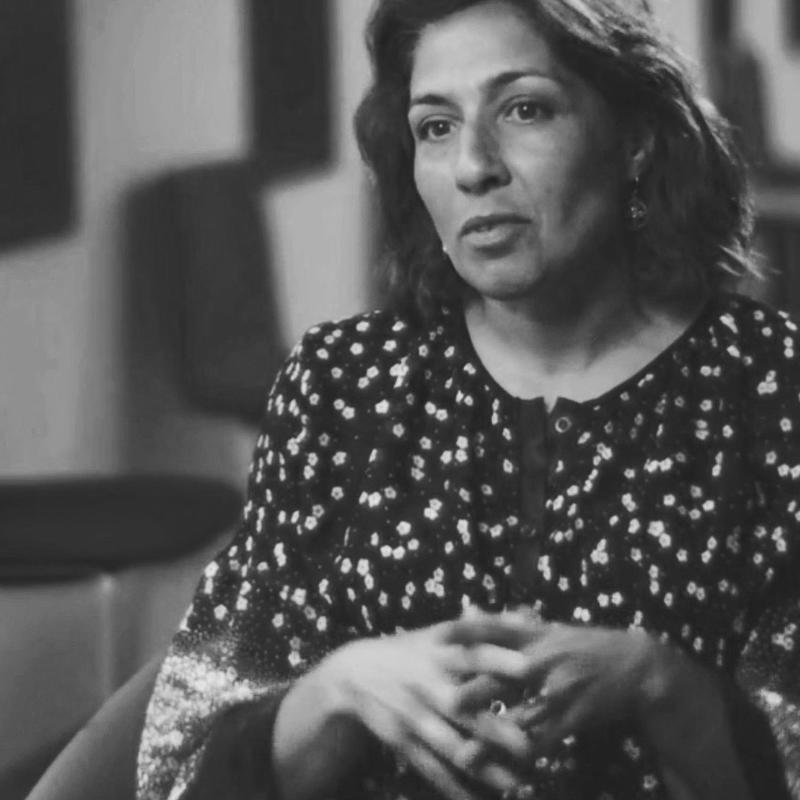
Arezou Azad is a historian of the premodern Islamicate East (Iran, Afghanistan, and Central Asia), specialising in the period from the rise of Islam in the seventh century to the Mongol Empire in the thirteenth century. She is Senior Research Fellow and Invisible East Programme Director at Oxford Lifelong Learning and holds the Chair on the Arts and Heritage of Afghanistan at Institut national des langues et civilisations orientales in Paris. She has written multiple books, including Sacred Landscape of Medieval Afghanistan (Oxford, 2013), Fadāʾil-i Balkh or the Merits of Balkh: Annotated translation with commentary and introduction of the oldest surviving history of Balkh in Afghanistan (Edinburgh, 2020), The Warehouse of Bamiyan: Economic Life in Medieval Afghanistan (Edinburgh, 2025) and The Rise and Fall of the Barmakids: Stories from a Forgotten Persian Manuscript (Edinburgh, 2026).
She received her DPhil (doctorate) from Oxford's Faculty of Asian and Middle Eastern Studies (formerly, the Oriental Institute), after which she co-directed the Balkh Art and Cultural Heritage Project, funded by the Leverhulme Trust 2011-2015. Arezou was a lecturer in medieval history at the University of Birmingham from 2013-2019.
She was born and raised in Germany, and before joining academia served as a UN peacekeeper in the Balkans, Timor Leste, and other hotspots around the world.